

Cavities Often Begin Silently
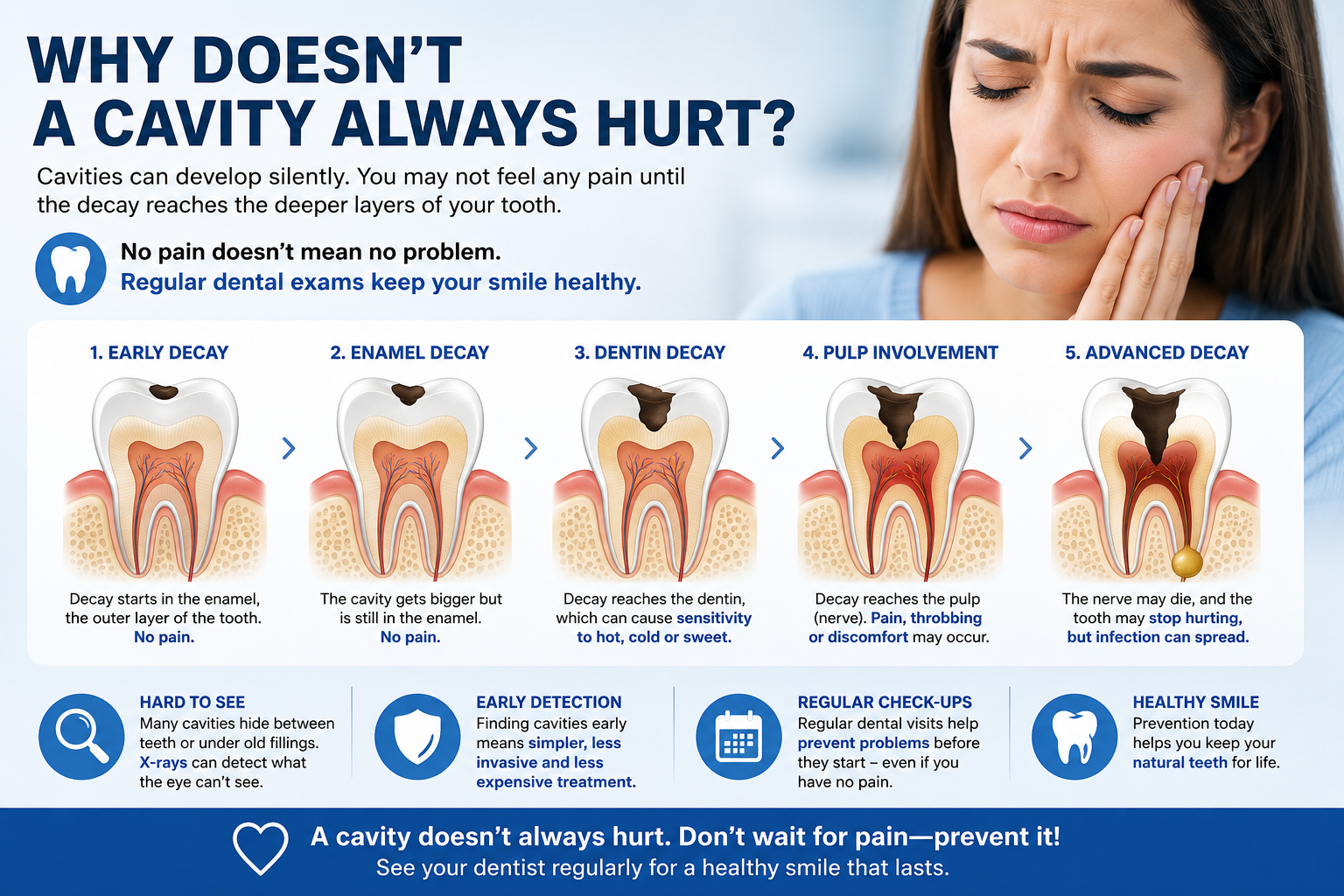
A cavity usually starts on the outer surface of the tooth, in the enamel. Since enamel contains no nerves, an early cavity can develop for months—or even years—without causing any symptoms.
Patients can eat normally, drink hot or cold beverages, and feel absolutely nothing unusual.
Pain Often Appears Late
Symptoms typically occur only when the cavity reaches deeper layers of the tooth, such as the dentin and eventually the pulp (the tooth’s nerve).
At this stage, patients may experience:
- Sensitivity to hot or cold foods and drinks
- Pain when chewing
- Spontaneous toothaches
- Intermittent discomfort
Unfortunately, by the time a tooth becomes painful, the damage is often more extensive and treatment may be more complex.
A Large Cavity May Even Stop Hurting
This may sound surprising, but some advanced cavities can actually stop causing pain temporarily.
When the tooth's nerve becomes severely damaged or dies, the pain may decrease or disappear completely. However, the infection often continues to spread inside the tooth and may eventually lead to an abscess, swelling, or a more serious dental infection.
For this reason, the absence of pain does not necessarily mean that a tooth is healthy.
Dental X-Rays Reveal What the Eye Cannot See
Some cavities develop between teeth or underneath existing fillings and cannot be detected during a visual examination alone.
This is why dental X-rays play a crucial role in early diagnosis. They allow dentists to identify problems before they become painful, more extensive, or more costly to treat.
Prevention Is Always the Best Approach
Regular dental checkups help detect cavities at an early stage, when treatment is typically simpler, less invasive, and more affordable.
Even if you are not experiencing any pain, it is important to visit your dentist as recommended based on your individual oral health needs.
Key Takeaway
A cavity does not always hurt. In fact, most early cavities are completely symptom-free. Waiting until pain develops can allow the disease to progress, potentially leading to more extensive treatment. Regular dental examinations and X-rays are essential for maintaining a healthy smile.
From the website : American Dental Association (ADA) – Tooth Decay (Cavities)